
A real estate commission is something that shows up at the very end of a home sale, but it actually influences the whole journey from the moment a property is listed. In selling a home, this cost quietly decides how much money stays in hand after everything is done.
Real estate commission also affects how real estate brokers behave, how listings are priced, and how fast or slow home sales happen in different markets. Whether it is average home price trends, existing home sales, or even fast-moving deals in housing starts, this commission sits in the background of every transaction.
It is the hidden structure behind how property money moves in real estate in the United States market.
Real estate commission explained
A real estate commission is basically the fee paid to real estate brokers and agents for handling the entire process of selling a property.
Think of it like this. When a house is sold, there is a lot happening behind the scenes. Pricing, marketing, showing the property, talking to buyers, handling offers, and finally closing the deal. That is what agents handle, and that is what real estate commission pays for.
It is usually taken as a percentage of the final selling price. So when average home price goes up or down, the commission automatically changes with it.
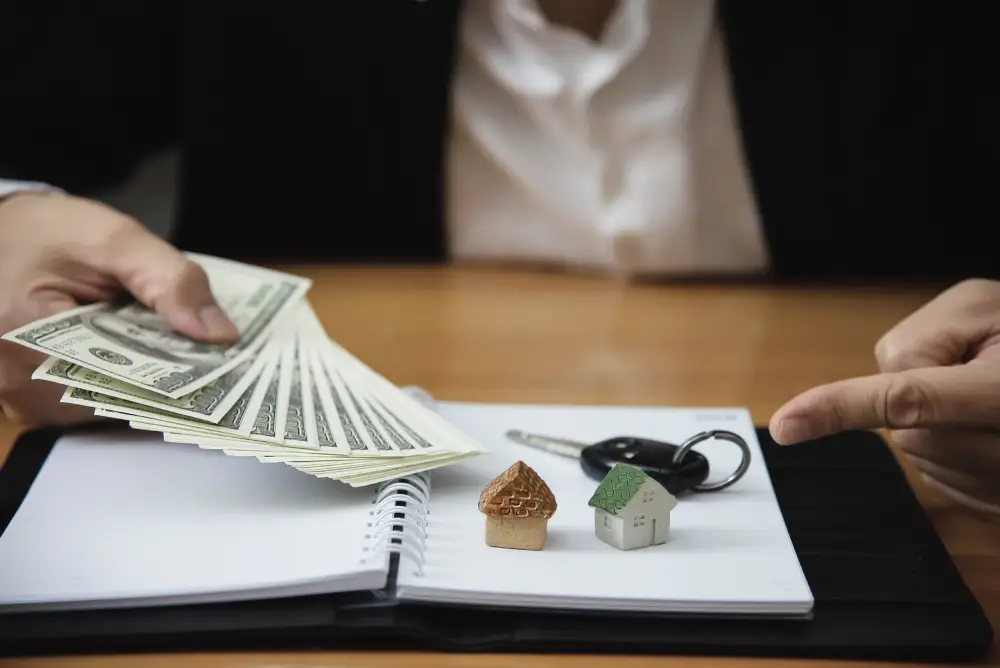
In most home sales, it is split between:
- The agent who lists the property
- The agent who brings the buyer
So real estate commission is not just one payment. It is shared work.
How real estate commission actually works step by step
real estate commission is not paid upfront. It is paid only when the deal closes.
Here is how it actually flows in real life:
First, a property is listed with real estate brokers. They decide the marketing strategy, set pricing based on cost per square foot, and analyze property appreciation trends.
Then buyers are brought in through listings and networks. Offers are negotiated, paperwork is handled, and finally the sale closes.
At the end, real estate commission is deducted from the total sale amount before the seller receives money.
So the seller never pays it directly from pocket. It comes out of the final sale.
Why real estate commission is usually a percentage
Real estate commission is usually based on percentage because property values are not fixed.
A small house in a cheaper state will sell for very different pricing compared to homes in the most expensive housing markets in the US.
So instead of charging a fixed fee, agents earn based on the value of the deal. That is why the average rate is usually around 5 percent to 6 percent.
When average home price increases, commission increases automatically. When market slows down and existing home sales drop, commission pressure also changes.
Simple example to understand real estate commission
Let’s say a home sells for 500,000.
If real estate commission is 5 percent, then total commission becomes 25,000.
That amount is then split between both agents involved.
So even if the effort feels similar, the commission changes based on price, not work hours.
That is why high-cost markets feel very different compared to cheaper states to buy a home.
Who actually decides real estate commission
A real estate commission is usually agreed between the seller and real estate brokers before listing the property.
It is not fixed by law. It is flexible.
That means sellers can negotiate it, especially in markets where demand is high or when selling a home quickly is not urgent.
In strong markets, agents may agree to lower rates just to secure listings. In slower markets, standard rates are more common.
Why real estate commission feels expensive to sellers
The real estate commission feels high because it is taken from the final sale price, not from profit margin.
So if a home sells for a large amount due to property appreciation or high cost per square foot, the commission also grows automatically.
Many sellers focus only on selling price, but forget that commission directly reduces what they actually keep.
That is why understanding real estate commission before listing is important.
Role of real estate brokers in real estate commission
Real estate brokers are the ones who earn this commission, but they also handle most of the heavy work.
They:
- Study market trends like housing starts and home sales
- Suggest pricing based on average home price in the US
- Market the property
- Handle negotiations
- Manage legal paperwork
So real estate commission is tied to both effort and responsibility.
In complex deals like commercial property for sale or new construction homes, the role becomes even more detailed.
How market conditions affect real estate commission
Real Estate Charges changes depending on market conditions.
When demand is high and homes sell quickly, agents may reduce commission to compete for listings.
When market slows down and existing home sales drop, commission structures become more rigid.
Other factors include:
- Rising or falling average home price
- Inventory levels in housing starts
- Regional demand differences
- Competition among real estate brokers
So commission is not just a number. It moves with the market.
Smart ways to reduce real estate commission
Real Estate Charges can often be reduced if handled the right way.
Here is how people usually cut costs:
- Talk to multiple real estate brokers before signing anything
- Ask for reduced commission if property is easy to sell
- Use hybrid or online listing services
- Compare commission offers across agents
- Avoid rushing when trying to sell house fast unless necessary
In many cases, negotiation alone can reduce thousands from commission cost.
How real estate commission differs by property type
Real Estate Charges is not the same for every property.
For example:
- Regular selling a home usually follows standard percentage rates
- commercial property for sale often has customized agreements
- luxury homes in expensive markets may have flexible structures
- fast deals may include reduced commission for quick closure
So property type plays a big role.

Why real estate commission is part of pricing strategy
A real estate charges is not just a fee. It is part of pricing strategy.
Agents often calculate listing price while keeping commission in mind. That is why changes in commission can directly affect how a property is positioned in the market.
It also influences buyer behavior because listing prices often reflect expected commission costs.
Conclusion:
A real estate charges is simply how the real estate system runs in the real estate in the United States.
It connects sellers, buyers, and real estate brokers into one transaction structure.
It changes with average home price, reacts to housing starts, and adjusts based on property appreciation trends.
Once it is fully understood, it becomes easier to negotiate, plan better pricing, and avoid losing money during selling a home.
Frequently Asked Questions
What is real estate commission in very simple terms?
A real estate charges is the money paid to real estate brokers for helping sell a property, taken as a percentage of the final sale price.
When do sellers actually pay real estate commission?
Real Estate Charges is paid at closing time, not upfront, and it is deducted directly from the final sale proceeds.
Can real estate commission be negotiated?
Real Estate Charges can be negotiated in most cases depending on market demand, property type, and agent flexibility.
Why does real estate commission increase with higher home prices?
Real Estate Charges increases because it is percentage based, so higher average home price automatically increases commission value.
Do buyers ever pay real estate commission directly?
Real estate commission is paid by sellers, but it is indirectly included in pricing, so buyers also feel its impact.
Why do real estate brokers charge commission?
Real estate brokers charge commission because they manage marketing, negotiation, and full transaction handling from listing to closing.
Is real estate commission different for commercial property?
It can be different for commercial property for sale because those deals are more complex and often individually negotiated.
Can real estate commission be avoided completely?
It can sometimes be avoided through direct selling, but it requires handling marketing and legal work independently.
How does real estate commission affect selling a home?
It reduces final profit from selling a home, making it important to factor into pricing decisions early.
Does market condition affect real estate commission?
With market conditions like housing starts, home sales activity, and demand levels in different regions.