
The credit score to buy a house depends on the mortgage program and lender. While some conventional loans generally look for a score around 620, certain government-backed loans may accept lower scores when other requirements are met.
Purchasing a home can be exciting, but many buyers have concerns about qualifying for a mortgage. Having a low credit score does not necessarily prevent you from buying a house, but it can limit your mortgage options and may affect your interest rate and overall affordability.
What Credit Score Is Needed to Buy a House?
There is no specific credit score to buy a house that qualifies an individual to purchase a home since criteria used by lenders are not standardized. However, they assess an individual’s income, debts, down payments, savings, and credit history among other factors.
A lot of conventional loans require a credit score to buy a house of 620 or higher. Government-backed options might be available if you can’t reach that high. FHA loans, for instance, tend to be a bit more lenient.
If you have a 580 credit score, you’ll probably be asked to put 3.5% down on the dream home, but if you have between 500-579, you might have to cover 10%. It all depends on lenders and their specific criteria.

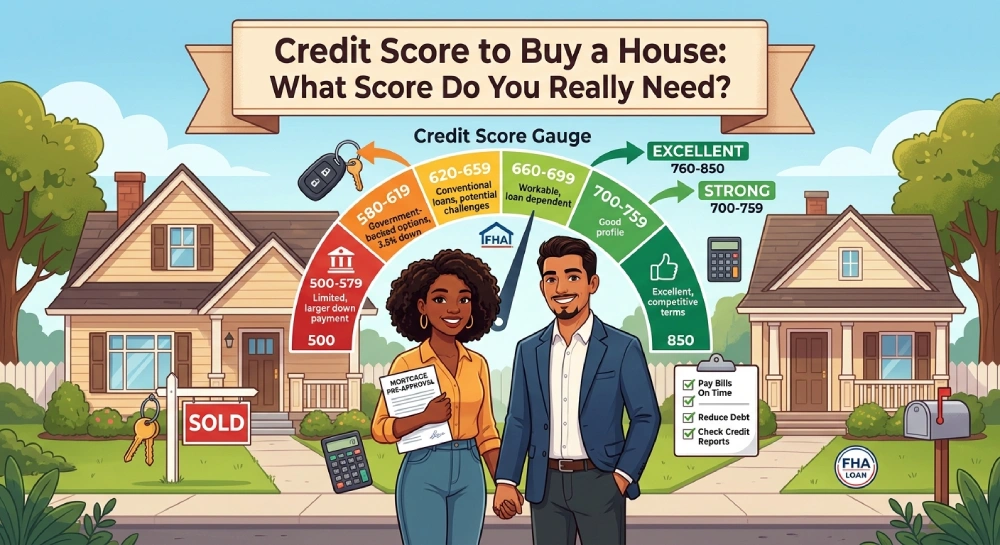
A Quick Credit Score to Buy a House Guide
| Credit Score Range | General Mortgage Position |
| 760 – 850 | Excellent; may qualify for very competitive terms |
| 700 – 759 | Strong credit profile |
| 660 – 699 | Generally workable, depending on the loan |
| 620 – 659 | May qualify for some conventional options |
| 580 – 619 | Some government-backed options may be available |
| 500 – 579 | Limited options; FHA may require a larger down payment |
| Below 500 | Mortgage options can be very limited |
Is 630 a Good Credit Score for Buying a House?
A 630 credit score may qualify you for certain mortgage programs, but it is generally considered a fair score rather than a strong one. For instance, if you are a borrower with a 630 credit score but with a stable income, you have a better chance to get approved than another borrower with the same credit score to buy a house but with a large amount of debt and an established history of late payments.
How Credit Score Affects Your Mortgage
Your credit score to buy a house and home loan are closely connected because lenders use your credit history to estimate how likely you are to repay borrowed money. Generally, a stronger score can improve your chances of receiving better loan terms.
The credit score to buy a house for mortgage approval may affect:
- Your eligibility for certain loan programs
- The interest rate you receive
- Your mortgage insurance costs
- Your required down payment
- The overall cost of borrowing
Why Late Payments Matter
A late payment can adversely affect the borrower’s credit profile, especially if the delinquency is severe and appears on the credit bureau. Several overdue accounts on the credit report can make the lender hesitant in approving the loan request.
Before applying for a mortgage, it is advised to look through the credit reports and deal with the discrepancies before applying for a loan. If there is an error on the report, it should be disputed to the credit bureau concerned.
Which Credit Score Do Mortgage Lenders Use?
When you check your credit score to buy a house, you may notice that you have different credit score to buy a house from different services. This happens because different lenders use different credit reports and scoring models.
They may use the middle score when reviewing your mortgage application. So, the credit score to buy a house you see may not be the same credit score the lender sees.
What Is Mortgage Pre Approval?
A pre-approval is when the lender approves an amount that they are willing to give as a mortgage based on their analysis of the borrower’s finances. A preapproval from a lender should not be mistaken for actual mortgage approval since they have only been through an initial evaluation of the borrower’s monetary situation.
The preapproval process assists you in ascertaining the amount you can expect to spend on a home. It’s critical to get multiple offers from various lenders and then select the mortgage option that suits you most.
How to Improve Your Credit Before Buying
If your current score is lower than you hoped, you do not necessarily need to abandon your plans. Give yourself time to strengthen your financial profile.
Focus on These Steps
- Pay every bill on time. Payment history is an important part of your credit profile.
- Reduce credit card balances. Lower revolving balances can improve your overall credit utilization.
- Avoid unnecessary new accounts. Opening several accounts before applying for a mortgage can create additional inquiries and change your credit profile.
- Check your credit reports. Look for incorrect balances, accounts, or payment information.
- Build savings. A stronger cash reserve can support your mortgage application and help cover closing costs and other expenses.
- Avoid major financial changes. Taking on substantial new debt shortly before applying can complicate the approval process.
Conclusion:
Knowing the needed of credit score to buy a house can help you prepare for the mortgage process. However, lenders also consider your income, debt, down payment, savings, payment history, and other financial factors.
It is also vital to check out the credit report to see if everything is correctly recorded. Getting mortgage preapproval and comparing deals from different creditors will allow you to choose the best option to become a homeowner.
Frequently Asked Questions
What credit score is needed to buy a house?
There is no universal score. Requirements depend on the mortgage program, lender, income, debt, down payment, and other factors.
What is the minimum credit score to buy a house?
It actually depends on the type of loan you’re applying for as well. FHA loans can sometimes allow for low credit scores as low as 500, if you meet other guidelines like a higher down payment.
Is 630 a good credit score for a mortgage?
Having a credit score of 630 may allow you to qualify for certain mortgage programs; however, there may be more options available to you that could provide you better terms and conditions.
Can I buy a house with a 580 credit score?
It is sometimes possible, especially for qualifying FHA mortgages.
Does a late payment stop mortgage approval?
Just having one late payment will not necessarily stop you from getting a mortgage loan, but it is something to consider if you want to improve your chances.
Does a higher credit score lower my mortgage rate?
Typically, higher credit scores will secure the lowest rates.
Do mortgage lenders use FICO credit scores?
Yes, for the most part, though it depends on the type of mortgage you’re financing.
Should I get mortgage pre-approval before house hunting?
Yes. Getting pre-approved will allow you to know what you’re borrowing and give you credibility as a buyer.
Can I improve my credit score before applying for a mortgage?
Yes. Paying bills on time, reducing revolving debt, checking reports for errors, and avoiding unnecessary new credit can help strengthen your profile.