
Smart home technology is everywhere now. But here is the thing. Not all smart living upgrades actually add value when it comes time to sell.
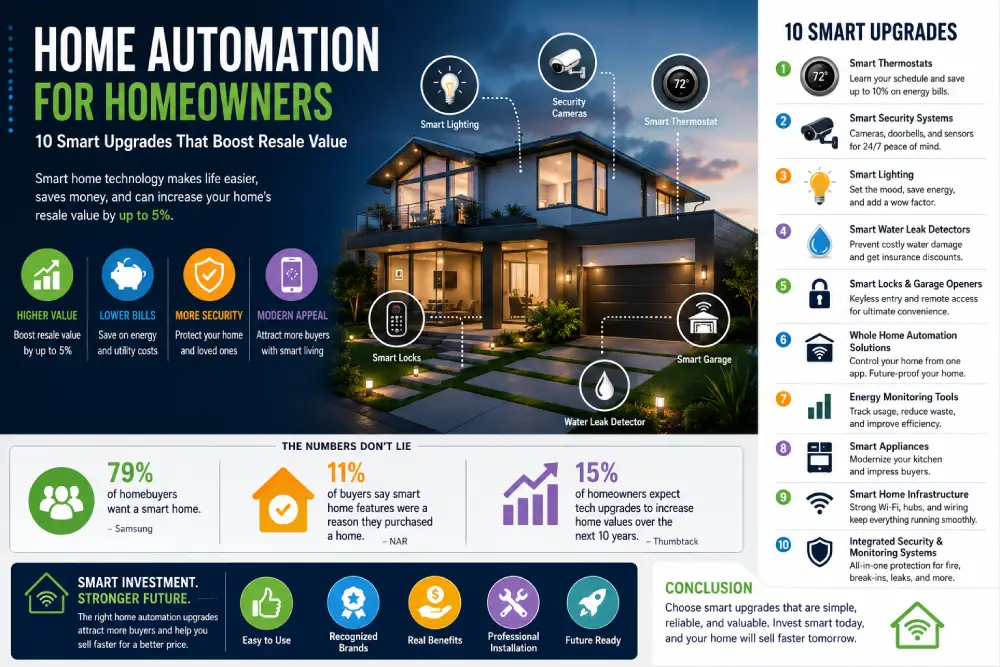
The first thing to understand is that home automation technology is not just about cool gadgets. It is about making life easier and saving money. When done right, it can boost your modern homes value by up to 5% .
Most buyers are looking for smart home features that work without headaches. They want systems that are easy to use. Not complicated tech that requires a degree to figure out.
Let us walk through what actually pays off in home Automation.
1. Smart Thermostats
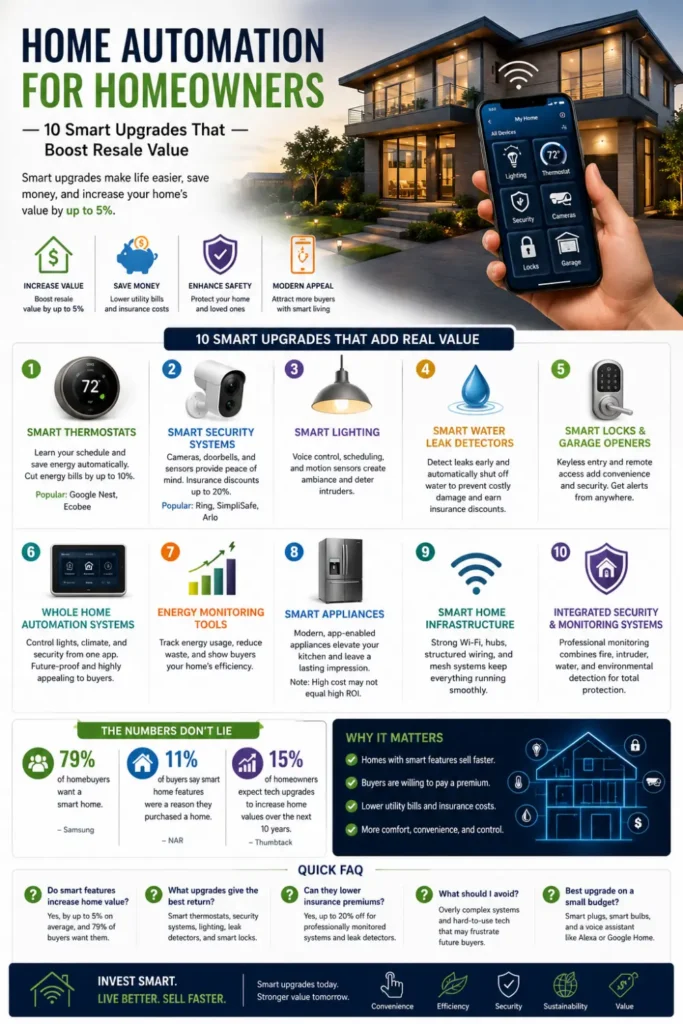
This is the simplest win for home builders. A smart thermostat learns your schedule and adjusts temperatures automatically. It saves energy without thinking about it. These devices are affordable and easy to install. They can cut energy bills by up to 10%. Buyers see them as a high-value feature. Popular options include Google Nest and Ecobee.
2. Smart Security Systems
Safety sells for property investment. Video doorbells, cameras, and motion sensors appeal to buyers who want peace of mind. Many insurers offer premium discounts up to 20% for professionally monitored systems . That is a selling point. Ring, SimpliSafe, and Arlo are well-known brands buyers recognize .
3. Smart Lighting
Programmable lighting with voice control and motion sensors adds modern appeal. It creates a wow factor during tours in Eco friendly homes. Buyers notice the ambiance. While it may not drastically change appraisal value, it creates an emotional connection that can make a difference . Motion-activated exterior lights also deter intruders.
4. Smart Water Leak Detectors
Water damage is one of the most expensive home insurance claims. Smart leak detectors and automatic shut-off valves prevent thousands in damage. These devices often qualify for insurance discounts. Buyers appreciate knowing the home has protection against flooding .
5. Smart Locks and Garage Door Openers
Keyless entry and remote access are becoming standard expectations. Smart locks let you grant access to visitors from anywhere. Convenience and security combined. Buyers like the ability to control access remotely and get alerts if a door is left open in consumer preferences.
6. Whole Home Automation Solutions System
Home automation systems that centralize control of lights, temperature, and security stand out to tech-savvy buyers. A joined-up system appeals to buyers who want everything in one place. It signals that the home is future-proof . But there is a catch. Complex systems are best installed by professionals. CEDIA-certified integrators create custom solutions that are future-proof .
7. Energy Monitoring Tools
Smart plugs and whole-home energy monitors track consumption and reduce waste. They are inexpensive but add an extra layer of control. They help buyers see the home’s efficiency. Small touches like this add up.
8. Smart Appliances
Touch-screen refrigerators, app-enabled ovens, and intelligent dishwashers add wow factor. They modernize the kitchen and strengthen appeal during listings . However, be cautious. High-end smart appliances often come with high price tags and may not significantly increase home value for Home Automation.
9. Smart Home Technologies Infrastructure
This is the hidden part. Wiring, hubs, Wi-Fi mesh systems, and structured cabling matter. Buyers cannot see your internet speed. But they will notice when everything works smoothly. A fast, reliable network is critical for all these devices .
10. Integrated Security and Monitoring Systems
All-inclusive systems with professional monitoring combine smoke detectors, break-in sensors, water monitors, and cameras. They reduce false alarms and provide comprehensive protection . Insurance companies appreciate them too.
How Much Value Does Home Automation Add?
Research from Samsung found that 79% of homebuyers want a smart home. Many are willing to pay a premium for it .
The National Association of Realtors found that 11% of buyers said smart home features were a reason they purchased a particular home . Smart home features could enhance resale value by up to 5%.
Thumbtack’s Home of the Future report found that homeowners expect tech upgrades to increase home values by 15% over the next 10 years .
Conclusion
Home automation is becoming standard. Buyers expect it.
But the key is choosing upgrades that are easy to use, widely recognized, and offer real benefits. Smart thermostats, security systems, lighting, and leak detectors are safe bets.
Whole-home automation systems can add serious value when professionally installed. Just make sure the system is user-friendly.
Invest smart. Your home will sell faster.
Frequently Asked Questions
What’s the difference between a smart home and home automation?
When stuff just happens by itself, lights turn on when the sun goes down, locks lock at bedtime. You don’t lift a finger. Most homes end up using both, to be honest.
What is a smart home automation?
It’s a house with gadgets that connect to the internet so you can control them from anywhere. Lights, thermostats, security cams, appliances, they all link up and make your life easier.
Do smart home features increase home value?
Yeah, they actually do. Studies show they can boost your home’s value by about 5%. And almost 80% of buyers are looking for a smart home. A lot of them will even pay extra for it.
What smart home upgrades are most valuable for resale?
Smart thermostats, security systems, lighting, water leak detectors, and smart locks. Those are the ones that matter most. Energy-efficient stuff looks good to buyers and might even get you insurance breaks.
How much do smart home upgrades cost?
It varies. Thermostats go for $50 to $500. Video doorbells $50 to $350. A whole-home system? That can run you thousands. And installation adds more on top.
Are smart home appliances worth it?
Fancy ones like touch-screen fridges? They look cool, sure. But they might not add much value when you sell. They’re pricey and don’t last as long as regular ones.
What should I avoid when upgrading my smart home?
Skip the complicated stuff that’s hard to figure out or needs constant fixing. And those wall panels? Keep it simple and easy to use and buyers will thank you.
Can smart home features lower insurance premiums?
Yes, they can. Some insurance companies give up to 20% off for professionally monitored security systems. Water leak detectors and smoke alarms can also get you discounts.
Is whole home automation worth the investment?
It can be, especially in fancier markets. Professionally installed systems that tie everything together like lights, AC, security, appeal to buyers who want convenience. But they cost more and gotta be user-friendly.
What’s the best smart home upgrade for a small budget?
Smart plugs. They turn any outlet into a smart one with lamps, fans, small appliances. Smart bulbs and a voice assistant like Alexa or Google Home are also cheap and easy ways to get started.